
← Back to News · 3-minute read
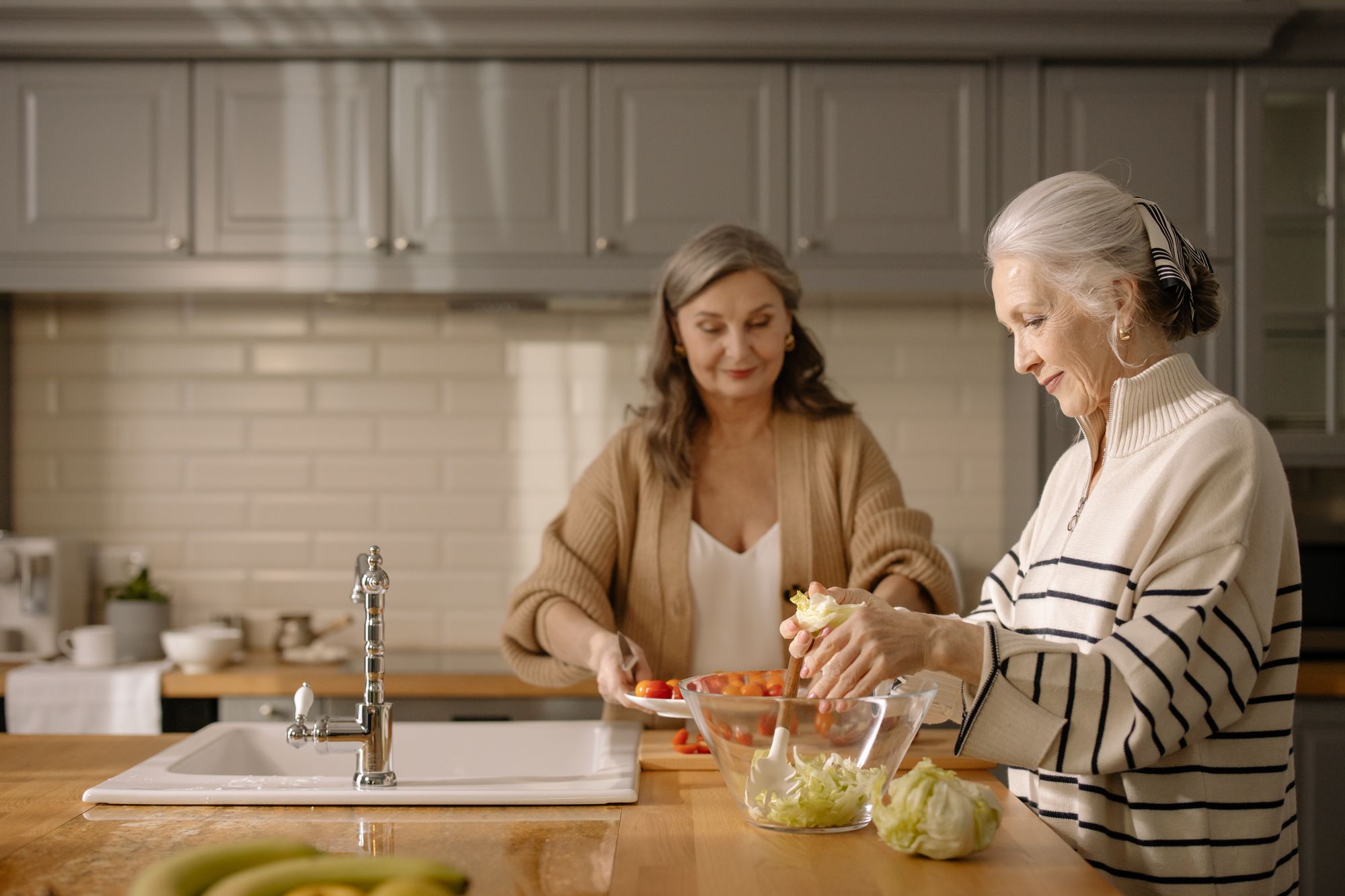
Many things change at the table over the years: cooking for one feels less appealing, routines disrupt mealtimes, and sometimes the pantry fills up with what is easy instead of what is good. Eating well, at that age, is not about going on a diet: it is a way of caring every day.
What does the WHO say?
The World Health Organization, in its advice for later adulthood (updated in 2022), recommends a varied and nutritious diet: fruit, vegetables, legumes, nuts and whole grains, along with milk, meat, poultry and fish. It suggests spreading it across five or six small, low-fat meals a day, limiting salt to less than five grams a day (around a teaspoon) and sugar to no more than ten percent of daily calories. And it reminds us that weight should be checked with a health professional: both overweight and underweight deserve attention, and sometimes people need to eat more, not less.
Practical tips from the NIA
The U.S. National Institute on Aging (NIA) adds practical tips for older adults: choose foods from every food group with little added sugar, saturated fat and sodium; spread protein throughout the day —fish, dairy, soy, legumes— to help maintain muscle; season with herbs and lemon instead of salt; and drink water throughout the day, rather than sugary drinks. If cutting and peeling is difficult, it suggests pre-cut fruit and vegetables.
Practical ideas to start with
Some practical ideas every family can adapt:
- Ask what they have eaten today, not just how they are: food rarely comes up in conversation unless someone asks.
- Stock the fridge together with easy, good things: washed fruit, yogurt, cooked legumes, nuts.
- Turn the meal into a plan: eating together tastes better and goes down better.
- Keep an eye on water: a glass in sight reminds more than ten pieces of advice.
- If weight or appetite drops for weeks, mention it to their doctor.
This article is informative and does not replace professional care. If appetite or weight changes persistently, talk to their doctor.
At Onorato we are working on an AI companion that converses and listens, and on an app for the family. Onorato accompanies; it does not replace anyone.
Sources, checked on 28 Oct 2026
- WHO, Eating well in later adulthood (advice updated in 2022)
- NIA, Healthy Meal Planning: Tips for Older Adults (2020)
Want to know how Onorato accompanies?
An AI companion that converses, listens and entertains, and an app that keeps the family close.