
← Back to News · 3-minute read
Sometimes a song from years ago opens a conversation that direct questions could not. Calling an older relative and not knowing what to talk about happens to almost everyone, and a photo, a melody or an object from home can be a good starting point.
What reminiscence is
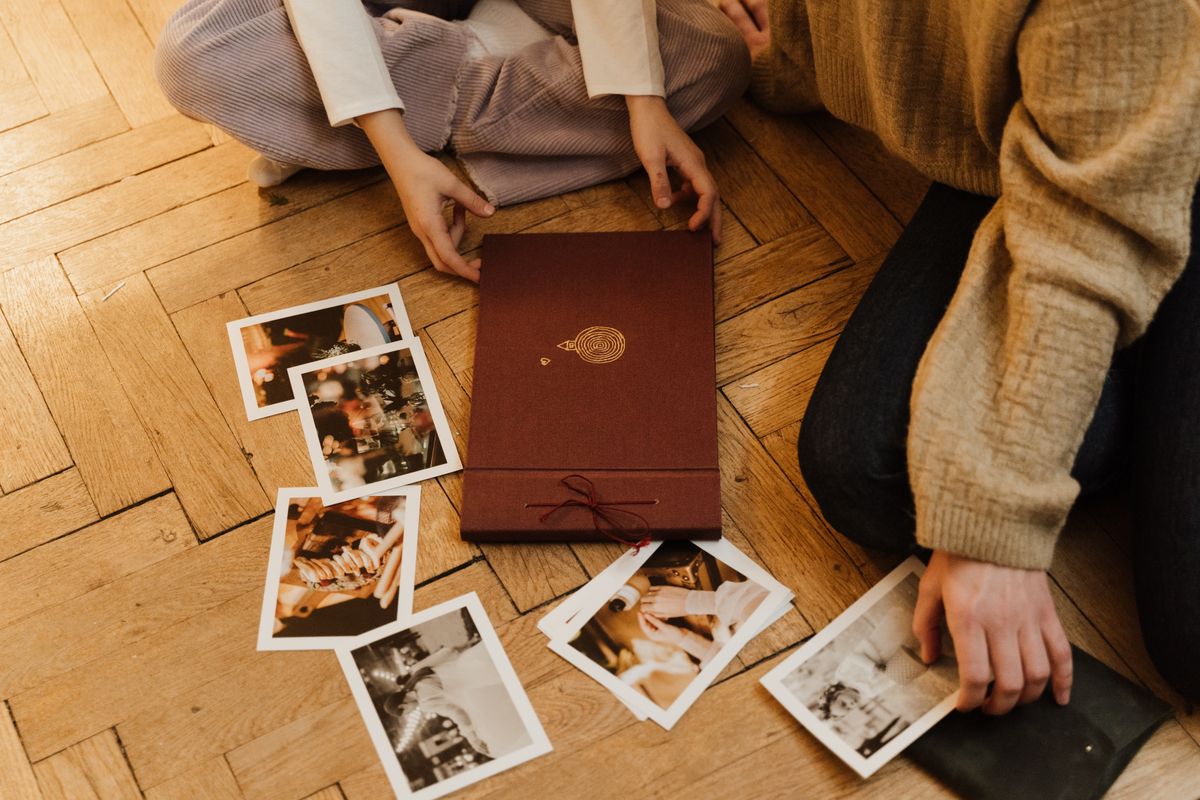
Talking about the past with the help of photos, music or objects is called reminiscence, and it has been used for a long time with older people: in workshops, in care homes and at home too. A review of 15 studies (Bohlmeijer et al., 2007) found that reminiscence has a moderate positive effect on life satisfaction and emotional well-being in older adults, and that it works especially well with people living in their own homes. In other words: it is not a treatment or a promise; it is a simple way of keeping someone company.
Music that wakes memories
Music is a direct doorway to memory: a song from the past can bring back memories very vividly, as the US National Institute on Aging (NIA, 2023) notes; the NIA studies music as a support for healthy aging and stresses that much more research is needed. The Global Council on Brain Health (AARP, 2020) concludes that listening to and making music has significant potential for brain health, well-being and social connection as we age, and recommends dancing, singing or moving to music because they are also fun ways to socialise. And one useful fact: the memories we keep best are usually from ages 10 to 30 (the so-called “reminiscence bump”), so songs from that stage of life are often among the most cherished.
Practical ideas to get started
A few practical ideas each family can adapt:
- Start from something concrete: a song from their youth, a photo, a recipe, an object from home.
- Ask about the story, not the fact: where were you?, who did you listen to it with?, what did people dance to back then?
- Don’t turn it into an exam. If they don’t remember, that’s fine: you can simply move on to something else.
- Share the music: play it together, sing a verse, hum along or listen with headphones. Start with calm music and see how they react.
- If it makes them uncomfortable or sad, stop the music and stay by their side: music can also bring back difficult memories.
- If you notice important changes in their memory, talk to their doctor. This article is for information and does not replace professional care.
At Onorato we are building an artificial intelligence companion that talks and listens, and an app for the family. Onorato keeps company; it does not replace anyone.
Sources, consulted on 23 Oct 2026
- Bohlmeijer et al., The effects of reminiscence on psychological well-being in older adults: a meta-analysis (2007)
- NIA, Could ‘musical medicine’ influence healthy aging? (2023)
- Global Council on Brain Health (AARP), Music on Our Minds (2020)
- Munawar, Kuhn & Haque, Understanding the reminiscence bump: A systematic review (PLOS One, 2018)
Want to see how Onorato keeps people company?
An artificial intelligence companion that talks, listens and entertains, and an app that keeps the family close.